Graduating from Therapy: When and How It Ends
It might seem strange for a therapy centre to write about ending therapy, but here is a truth we hold dear: our goal is to work ourselves out of a job for your child. Therapy is not meant to last forever. The aim is always for your child to need us less and less. Here is an honest guide to how and when that happens.
What graduating actually means
Graduating from therapy means your child has met the goals we set together and can now use those skills confidently in everyday life, without ongoing support. It is the moment a child no longer needs the scaffolding, because they can stand on their own. It is, quite simply, the happiest outcome we work towards.
For some children this comes after a few months. For others, particularly those with conditions such as cerebral palsy or Down syndrome, support may continue in changing forms over a long time, and graduating may mean stepping down rather than stopping entirely. Both are successes.
The signs of readiness
We look for several signs before suggesting it might be time to finish:
- Goals are met. The specific targets we set have been reached and held.
- Skills travel. Your child uses the new skills at home and school, not just in sessions.
- Skills last. The progress holds steady over time rather than fading.
- Confidence is there. Your child manages situations that used to be hard.
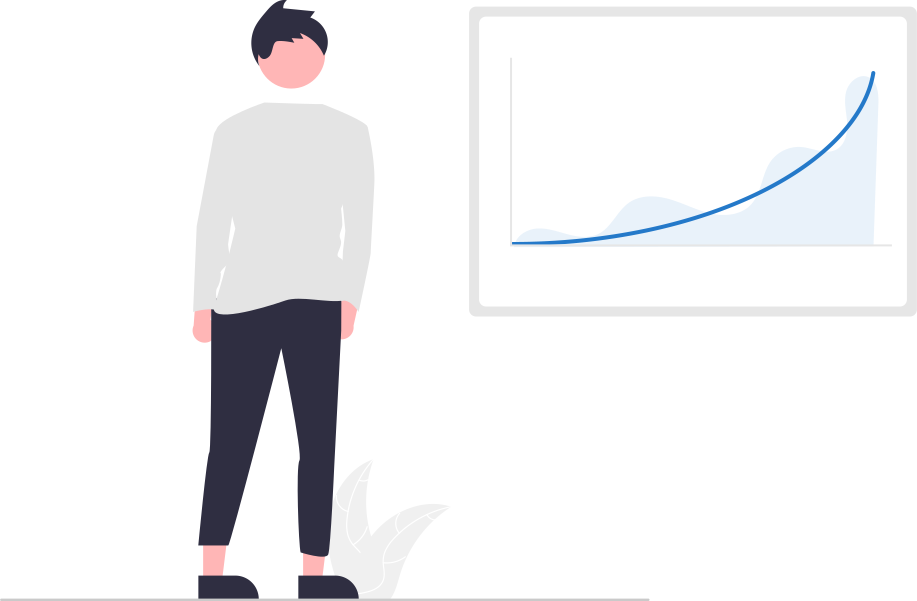
This is exactly why we measure progress so carefully throughout. The same tracking that shows whether therapy is working also tells us, clearly and honestly, when it is no longer needed.
It is worth saying that finishing therapy is a decision we make together, never one we impose. You know your child in settings we never see, so your view carries real weight. If you feel a goal is genuinely secure, or if you sense your child could use a little longer, we listen. The aim is for everyone to feel confident and ready, not rushed towards an exit.
We never end it abruptly
Ending therapy is a planned, gentle transition, never a sudden stop. We often reduce the frequency of sessions first, then check that progress holds at the lighter pace before stepping away fully. This gives everyone confidence that the gains are real and lasting.
Support does not vanish
Graduating does not mean you are on your own. We give you strategies to keep the progress going at home, and we are always here if a new concern arises or if your child would benefit from a check-in later. Children grow and change, and you are welcome back at any time. Our door in Multan stays open.
It is also normal to feel a little anxious as the regular sessions come to an end. After months of structure and support, stepping away can feel like letting go of a safety net. Please know that we only suggest finishing when the evidence shows your child is truly ready, and a gentle, gradual transition is designed precisely to replace that anxiety with quiet, well-earned confidence.
How we do this at Inclusive
At our MPS Road, Model Town centre in Multan, graduating is part of the plan from the very beginning. We set clear goals after a developmental assessment, track them honestly, and review them with you, so the ending is a celebration you can see coming. You can follow the whole journey on our therapy process page.
Whether you are just starting out or wondering whether your child is ready to finish, we are here to guide you. Contact our Multan team to talk it through.
Frequently asked questions
How do we know our child is ready to finish therapy?
Your therapist tracks goals at each review. When your child meets them, uses skills naturally at home and school without prompting, and keeps progressing on their own, graduation is discussed. It is a planned decision made together, never a sudden stop.
Will the progress fade once sessions end?
Skills that are truly mastered tend to stick. Before discharge, your therapist makes sure abilities are used across different people and places, not just in the clinic. Keep practising naturally at home, and gains usually hold well over time.
Can we come back if difficulties return later?
Absolutely. Children grow in stages, and new challenges can appear. You are always welcome to contact us at +92 314 6040262 for a review. Returning for a short top-up is common and nothing to feel discouraged about.
What can we do at home after graduating?
Your therapist gives you a simple home plan suited to your child. Weave practice into daily routines like meals, play and bedtime stories. Keep talking, reading and praising effort. These everyday moments keep skills strong long after sessions end.