Why Play Is Serious Work for Your Child’s Development
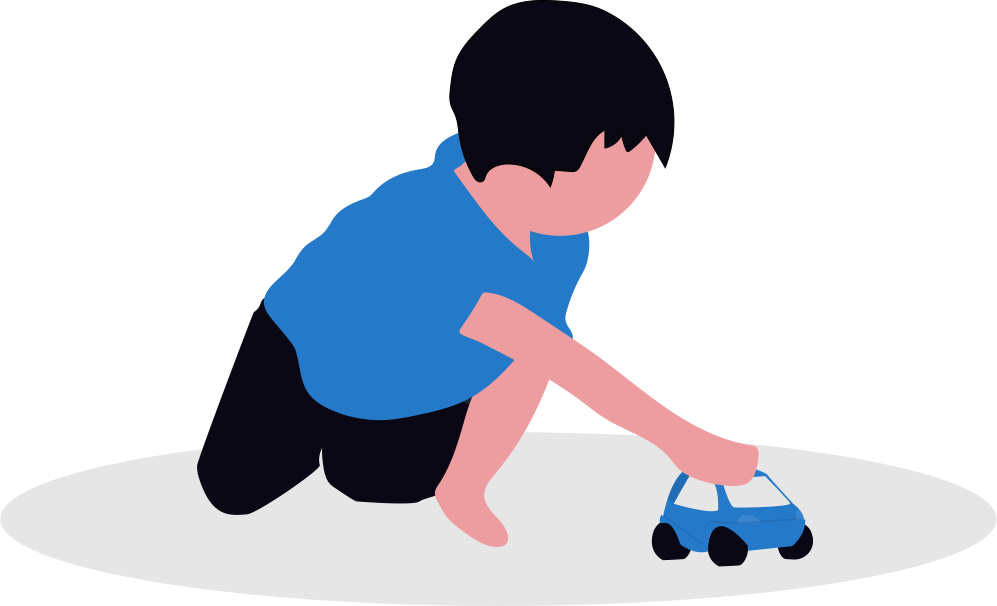
When you watch your child stacking blocks, splashing in water, or pretending to cook dinner, it can look like simple fun. In truth, you are watching some of the most important learning of their entire childhood. Play is how children make sense of the world, and it is the very engine that drives speech, movement, thinking, and relationships forward.
What play actually teaches
Play is far more than entertainment. Through play your child rehearses every skill they will need in life, in a safe and joyful way. A child building a tower is learning about balance and cause and effect. A child playing pretend is practising language, imagination, and social roles.
- Language: new words, conversation, and storytelling grow through play.
- Thinking: problem-solving, memory, and planning develop with every game.
- Movement: building, drawing, and climbing strengthen hands and bodies.
- Social skills: sharing, taking turns, and reading emotions are practised with others.
How play changes as your child grows
Play develops in recognisable stages, and each one builds on the last. Knowing these stages helps you see your child’s progress and join in at the right level.
- Exploratory play: babies mouth, shake, and bang objects to learn about them.
- Cause-and-effect play: toddlers love pressing buttons and watching what happens.
- Pretend play: from around two, children act out everyday scenes and stories.
- Cooperative play: older children play games with rules and shared goals.
Pretend play in particular is closely linked to language. A child who can use a banana as a pretend telephone is showing the same symbolic thinking that underpins words. If pretend play is slow to appear, our page on autism explains why this can sometimes be worth exploring.
How to make play work harder for learning
You are your child’s favourite and most powerful play partner. You do not need expensive toys, only your attention and willingness to join in.
- Follow your child’s lead rather than directing the play.
- Get down to their level and narrate what is happening with simple words.
- Offer open-ended toys such as blocks, cups, and dolls that can become anything.
- Limit screens and protect plenty of time for hands-on, face-to-face play.
Play is also at the heart of therapy. Our occupational therapy and speech and language therapy use playful activities precisely because that is how children learn best.
How we help in Multan
At Inclusive Developmental and Therapy Center, play is woven through everything we do. If your child finds it hard to play, share, or imagine, our developmental assessment can help us understand why, and our therapists turn play into purposeful, joyful progress.
If you would like ideas to support your child through play, or have any worries about how they play, contact our Multan team and we will be glad to help.
Frequently asked questions
Why is play so important for my child’s development?
Play is how children learn. Through play they build language, problem-solving, motor skills, imagination, and social understanding. It is not just fun or wasted time; it is the natural way young children make sense of the world around them.
What kind of play helps speech and language the most?
Pretend play, turn-taking games, and simple back-and-forth play with you are especially powerful. Naming actions, narrating what you do, and following your child’s interests turn ordinary play into rich language practice without any special toys needed.
Are expensive toys necessary for good development?
Not at all. Everyday items like cups, boxes, spoons, and household objects make wonderful toys. What matters most is a caring adult who joins in, talks, and responds. Your attention and interaction are worth more than any costly toy.
How much should I play with my child each day?
There is no fixed number, but regular short bursts of focused, interactive play throughout the day add up. Even ten to fifteen minutes of giving full attention, following their lead, and talking together makes a real difference.